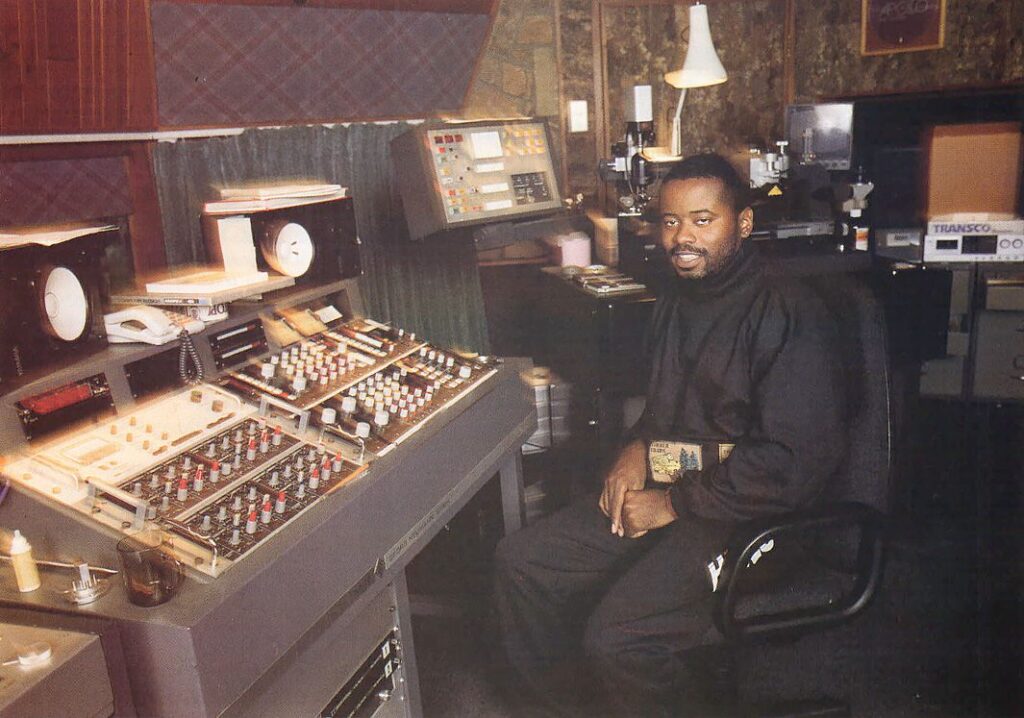
On the evening of October 31, 2026, the Yu Yu club in Mexico City was supposed to open the festivities of the All Saints’ Day, locally known as Dia de los Muertos. Juan Atkins was expected to the stage, but unfortunately, the maestro’s heart had already stopped in the hotel room. Within a day, social media was flooded with good-byes from the mainstays of electronic music and, without exaggeration, millions of fans. The godfather of techno had passed the way we knew him: close to excited fans.
When Atkins was born in Detroit in 1962, the city was living under the spell of Motown, the record label and its roster, which were cherished all over the world. However, young Atkins was more attracted to machine sounds, with just the right dose of funk. He once recalled that the synthesizer sound made him feel like seeing an UFO landing on the record. For him, the life-changing moment was Funkadelic’s nearly 75% electronic hit “Flash Light”, according to Simon Reynolds’ book “Energy Flash”.
Model 500 and Metroplex
At the end of his teenage years, Atkins and fellow student Richard Davis, a Vietnam veteran, formed the duo Cybotron, whose songs “Cosmic Cars” and “Clear” laid the foundation to the Detroit electro domination. The founding of his own record label, Metroplex, and the new project Model 500 in 1985 were seminal moments in techno’s development, and Atkins’ influence on the sound of subsequent generations was immense. The Model 500’s debut single, “No UFOs”, was a manifesto which served as a base for Atkins’ techno aesthetics.
Previously, Atkins had come together with Derrick May and Kevin Saunderson, known as the Belleville Three, and this formation was the key to Detroit’s electronic saga. Their peak moments belonged to the first half of 1990s, from where they continued to be more or less active with their own projects and labels.
Inspired by the stars
Unlike Jeff Mills, with floor-razing 4/4-beats, or Underground Resistance with robust tracks of the early days, Atkins pioneered a sound of milder futurism. Space was his source of inspiration when looking at the titles of tracks over the years. On the other hand, Atkins did not forget his roots, being influenced by soul and funk.
In an interview to De:Bug (2005), Atkins admitted that there were periods when he didn’t touch his machines for a year. At the same time, he was open to new ambitious projects, such as Borderland with Moritz von Oswald. At the 25th birthday celebrations of Tresor in July 2016, the duo enlisted the help of Thomas Fehlmann for a live performance, and the energetic “veterans” offered one of the greatest PAs of the festival. When exchanging a few words with Atkins in the halls of the Catalonia Hotel, a few hundred meters from Tresor, he left a very calm and even timid impression.
Atkins’ Metroplex is still active today, and in 2015 it released the last Model 500 album “Digital Solutions”. On the penultimate Friday of October, the first part of the compilation series “Four Decades Of Detroit Techno”, dedicated to Metroplex, was celebrated during the Amsterdam Dance Event, where Atkins performed despite of deteriorating health. A week later, the program included a gig in Mexico …
The post first appeared in Estonian in Delfi Kultuur.